Introduction
When it comes to upgrading a bathroom, the walls often take centre stage. Gone are the days when tiles were the only option for wet areas. Homeowners and renovators across the UK are discovering the convenience, beauty, and practicality of shower wall panels. Whether you’re planning a full refurbishment or just refreshing a tired bathroom, aqua panels, PVC panels, and wet wall panels offer a stunning and hassle-free alternative.
In this ultimate guide, we’ll walk you through everything you need to know about shower panels, how they compare to traditional options, and why they’ve become a top trend for modern bathrooms.

What Are Shower Wall Panels?
Shower wall panels, also known as bathroom wall panels or wet wall panels, are large sheets made from waterproof materials. Designed to cover walls quickly and seamlessly, they eliminate the need for grouting, making them more hygienic and easier to maintain than traditional tiles.
Materials commonly used include:
- PVC panels (lightweight, affordable, and easy to install)
- High-Pressure Laminate (HPL)
- Acrylic
- Composite materials
Each type offers different aesthetics and price points, but PVC shower panels remain a firm favourite across the UK for their versatility and cost-effectiveness.
Why Choose Shower Panels Over Tiles?
Tiles have long been the traditional choice for bathrooms, but they come with a few drawbacks: grout lines that attract mould, time-consuming installations, and occasional cracking or chipping. Bathroom cladding with panels removes these issues entirely.
Here’s why more people are choosing shower wall panels:
- Quick Installation: Panels can be installed over existing tiles or directly onto the wall.
- Waterproof: No grouting means no water seepage.
- Low Maintenance: A simple wipe keeps them looking new.
- Seamless Appearance: Large panels create a clean, modern aesthetic.
- Variety of Styles: From marble effects to gloss finishes, there’s a design for every taste.

Exploring the Different Types of Shower Wall Panels
When choosing your new bathroom panels, it’s helpful to understand the options available:
1. PVC Shower Panels
PVC panels are lightweight, cost-effective, and available in an array of finishes including tile effect, marble, and stone. They are easy to cut and install, making them ideal for DIY projects. PVC shower panels are also naturally resistant to mould and mildew, perfect for the humid UK climate.
2. Aqua Panels
Aqua panels are a premium type of bathroom cladding designed specifically for wet environments. They offer enhanced waterproofing, durability, and insulation compared to basic PVC panels. Aqua panels are particularly popular in high-end bathroom renovations where longevity and luxury aesthetics are priorities.
3. Wet Wall Panels
Wet wall panels are engineered for full water exposure, making them ideal for showers and wet rooms. They are thicker and sturdier than standard PVC panels and come in a wide range of textures and finishes, from minimalist gloss to realistic stone effects.

Popular Styles and Finishes in the UK
Whether you’re designing a boutique hotel-style ensuite or a family-friendly bathroom, bathroom wall panels come in a variety of styles:
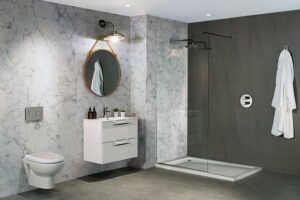
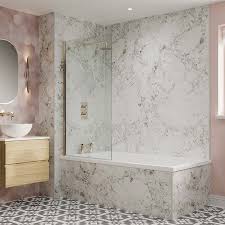
- Marble Effect Panels: Luxurious and timeless, ideal for sophisticated spaces.
- Tile Effect Panels: Get the classic look of tiles without the maintenance.
- High Gloss Panels: Reflective finishes add a sense of space, perfect for small bathrooms.
- Textured Stone and Slate Panels: Create a natural, spa-like feel.
- Wood Effect Panels: For a rustic or Scandinavian-inspired bathroom.
Thanks to technological advances, today’s bathroom cladding options look incredibly authentic and high-end, even when made from affordable materials like PVC.

How to Install Shower Wall Panels
One of the biggest selling points of shower panels is the easy installation process. Here’s a basic overview:
- Prepare the Surface: Walls should be clean, dry, and smooth.
- Measure and Cut: Measure the area carefully and cut the panels to size.
- Apply Adhesive: Use a strong panel adhesive across the back of the panel.
- Fit the Panels: Press firmly onto the wall and adjust as needed.
- Seal the Edges: Use waterproof sealant around edges, joints, and fixtures.
Many UK homeowners opt for DIY installation, while others hire professionals to ensure a perfect finish, especially for larger bathrooms or complex designs.

Shower Panels and Bathroom Cladding: A Match Made in Heaven
Bathroom cladding using wet wall panels isn’t just for showers it can cover an entire bathroom for a seamless, waterproof, and modern look. Full-room cladding creates a cohesive design, protects all walls from moisture, and simplifies cleaning.
Common areas for full bathroom cladding include:
- Around bathtubs
- Behind sinks and vanity units
- Full walls and even ceilings
Because bathroom panels come in large sheet formats, you can minimize joins, further reducing the chance of leaks and enhancing the sleek aesthetic.
Cost of Shower Wall Panels in the UK
The cost of bathroom wall panels in the UK varies depending on material, brand, and finish:
- PVC Panels: From £30 to £80 per panel
- Aqua Panels: From £80 to £150+ per panel
- High-End Wet Wall Panels: From £100 to £200+ per panel
Additional costs might include adhesives, trims, and installation if you’re not going DIY.
Despite the initial outlay, many homeowners find that shower panels save money long-term because they last longer, require less maintenance, and don’t need costly regrouting or tile replacement.

Eco-Friendly Bathroom Solutions
Many manufacturers now offer environmentally friendly bathroom cladding options. PVC panels can often be recycled, and composite panels made from sustainable materials are growing in popularity. Choosing longer-lasting products also reduces waste compared to the regular replacement cycle associated with tiles.
If sustainability is important to you, check for UK suppliers offering eco-conscious aqua panels and bathroom panels.

Maintenance and Care Tips
Caring for your shower wall panels is a breeze:
- Use a soft cloth and mild detergent.
- Avoid abrasive cleaners or scouring pads.
- Regularly inspect and reseal any silicone joints to maintain waterproofing.
- Wipe down panels after showers to prevent water spots, especially on gloss finishes.
Because there are no grout lines, you’ll find that your bathroom stays fresher and cleaner with minimal effort.

Final Thoughts: Are Shower Wall Panels Worth It?
If you’re considering a bathroom makeover, shower wall panels are a smart, stylish, and practical choice. They offer a cost-effective solution to modernize your bathroom while saving you time on cleaning and maintenance.
With so many options from budget-friendly PVC panels to premium aqua panels there’s something for every style and budget. Whether you’re looking for full bathroom cladding or just want to upgrade your shower enclosure, bathroom wall panels are transforming homes across the UK.
So why not say goodbye to grout and hello to gleaming, waterproof walls?